

Therapy for High-Achieving Women
Online therapy for people in Minnesota & Oregon
Walk & Talk therapy for people in Minnesota
You’ve learned how to function. Really well.
That doesn’t mean you feel okay.
Therapy for high-achieving women navigating perfectionism, overthinking, anxiety, burnout, people-pleasing, and the pressure to hold everything together.

You might be here because…
✓ Constantly mentally “on”
✓ Like your worth depends on productivity or usefulness
✓ Exhausted by overthinking and self-criticism
✓ Responsible for everyone else’s emotions
✓ Unable to relax without guilt
✓ Afraid of disappointing people
✓ Stuck between high standards and complete burnout
✓ Functional, capable, and deeply overwhelmed
You do not need to fall apart before you deserve support.
Why Therapy Can Feel Complicated

Especially when you’re used to being the competent one in control.
Many high-achieving women are used to solving problems, pushing through stress, and taking care of others before themselves.
You may have learned to:
stay productive no matter how overwhelmed you feel
overanalyze decisions and interactions
disconnect from your own needs
hold yourself to standards you would never expect from someone else
keep functioning long after your body and mind are exhausted
Therapy is not about becoming less capable.
It’s about creating a life that no longer requires you to survive through constant pressure, self-monitoring, or emotional overfunctioning.



“No feeling is final.”
- Rainer Maria Rilke
How I Help
Understand the Patterns
We explore the beliefs, coping strategies, and emotional patterns that keep you stuck in cycles of anxiety, perfectionism, or self-pressure.
Build Practical Skills
Together we practice evidence-based tools that help with emotional regulation, boundaries, self-compassion, anxiety, and overthinking.
Process What’s Beneath the Surface
When helpful, we may use approaches like EMDR to process experiences that continue to shape how you relate to yourself, achievement, relationships, or safety.
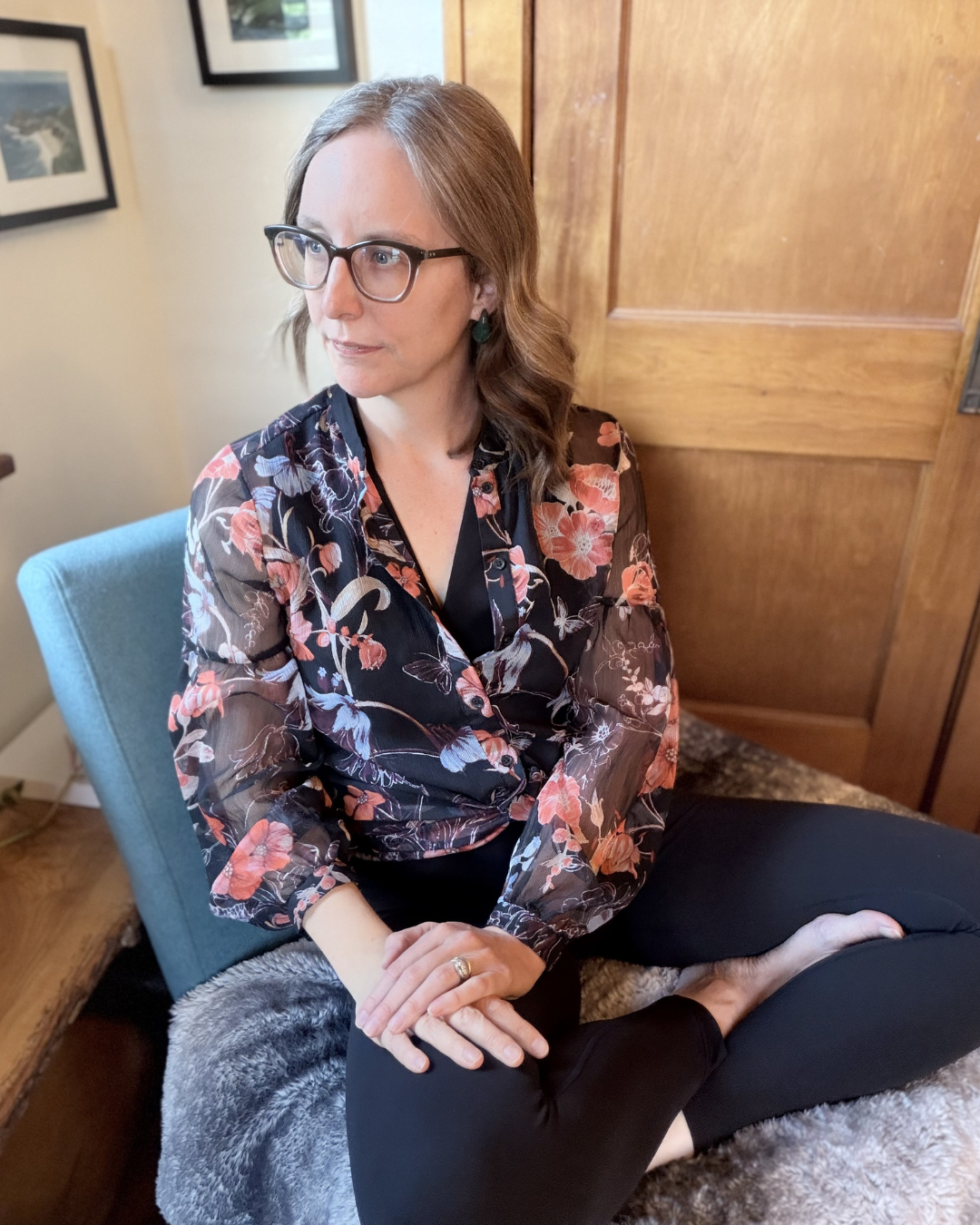
About Leah
Courage Grounded in Compassion
My approach is warm, thoughtful, practical, and collaborative.
I work especially well with people who are intelligent, reflective, emotionally complex, and tired of carrying so much internally while appearing “fine” externally.
Together we’ll practice courage grounded in compassion so that your life becomes less driven by fear, pressure, and survival—and more shaped by clarity, self-respect, connection, and intention.
No perfection required.
Just a wiser way forward.
-
No. The goal isn't to lower your ambition, it's to separate ambition from the fear, self-criticism, and exhaustion that often gets fused to it. Most clients leave therapy just as capable, but no longer running on a system where rest feels like failure and a mistake feels like a crisis.
-
Coaching is generally focused on goals and strategy. Therapy goes underneath that, into the beliefs and patterns that make rest, boundaries, or self-compassion feel unsafe even when you know logically that you deserve them. You don't need a defining traumatic event to benefit, chronic overfunctioning, perfectionism, and self-criticism are enough reason on their own.
-
Because overthinking is often the problem, not the solution. The part of you that analyzes, plans, and prepares for every outcome is the same part that's exhausted. Therapy works with the parts of you that don't respond to logic alone, including how your body holds stress, which is part of why approaches like EMDR or IFS can help once willpower and analysis have already been tried.
-
It's not crisis intervention, and you don't need to be falling apart to deserve a session. Early sessions usually focus on naming the patterns that keep you stuck (perfectionism, people-pleasing, the inability to rest) and from there we build practical tools alongside deeper work on where those patterns started.
-
That comes down to a few things: the sense of connection you feel with your therapist (usually clear within the first 3–5 sessions), whether the approach matches what you're working on, and your own readiness to invest time and energy right now. If it's not landing, that's worth naming directly because it can usually be adjusted.
-
Not at all. Many people seek therapy because they feel chronically overwhelmed, anxious, emotionally exhausted, disconnected from themselves, or stuck in painful patterns.
-
Most of this work draws on Acceptance & Commitment Therapy (ACT), Internal Family Systems (IFS), and Cognitive Behavioral Therapy (CBT). These approaches are suited to perfectionism, self-criticism, and chronic overthinking. When it's useful, we may also use EMDR to process specific experiences that still shape how you relate to achievement, safety, or your own worth.
-
That’s completely okay. A consultation call can help us determine whether working together feels like a good fit.
-
It's about 15 minutes. I'll ask what's bringing you to therapy now and what you're hoping will be different, and you can ask me anything you'd like. By the end, we'll have a sense of whether moving forward together makes sense.
-
Sessions are primarily online for clients located in Minnesota or Oregon at the time of the session (state licensing laws require this, even if you live there but happen to be traveling). If you're in the Twin Cities area, walk & talk sessions are also available. In this kind of therapy, we meet outside and hold the session while walking, which some clients find easier for processing than sitting still in an office.
-
I do take some insurances and if I don’t take your insurance, you may still be able to receive partial reimbursement for therapy using your out-of-network benefits.
You can learn more here.
-
I currently work full-time as a therapist with Lyra Health. If your employer provides Lyra as an Employee Assistance Program (EAP) benefit, you may be able to work with me using those sessions.
Sessions through Rootwise Mental Wellness are currently available during the following times:
Sundays: 9:00 AM – 3:00 PM CST
Mondays & Tuesdays: 6:00 PM – 8:00 PM CST
Wednesdays: 7:00 PM – 9:00 PM CST
-
I am licensed to provide therapy to clients physically located in Minnesota or Oregon at the time of the session.
Because therapy licensing laws are state-specific, sessions cannot occur if you are physically located outside Minnesota or Oregon, even if you normally reside in one of those states. If you travel out of state, we can resume sessions once you return to MN or OR.
-
You can learn more in-depth information about the treatments I provide here. In general, I incorporate the following treatment modalities into my work with clients:
Eye Movement Desensitization Reprocessing (EMDR)
Acceptance & Commitment Therapy (ACT)
Internal Family Systems (IFS)
Cognitive Processing Therapy (CPT)
Cognitive Behavioral Therapy (CBT)
Dialectical Behavior Therapy (DBT)
Prolonged Exposure Therapy (PE)
Family Systems
Personality Pathways (Enneagram-informed therapy)
-
Trauma and anxiety
Stress, chronic stress, and burnout
Health and caregiver-related issues
Healthcare/medical stress and trauma
ADHD and executive function skills
Learn more here.